
Key Points
- Becerra has long-standing ties to three major migrant NGOs with documented links to Mexican officials and consulates.
- The groups have backed Becerra politically through endorsements, events, confirmation support, and public advocacy.
- One of the groups received millions in taxpayer funds while conducting migrant services, voter outreach, and anti-ICE activism.
by Seamus Bruner and Price Sukhia
California gubernatorial candidate and former Health and Human Services Secretary Xavier Becerra’s relationship with the Mexican government doesn’t run through one nonprofit. It runs through many.
Newly detailed investigative reporting from the Government Accountability Institute tracks Becerra’s long-standing, documented relationships with several of the most politically powerful migrant nonprofits in the country, including those with deep, operational ties to the Mexican government.
UnidosUS: Decades of Alignment
UnidosUS, formerly the National Council of La Raza and one of the largest Latino advocacy organizations in America, has been a Becerra ally for decades. GAI notes the group was created as a militant liberation movement in the 1960s.
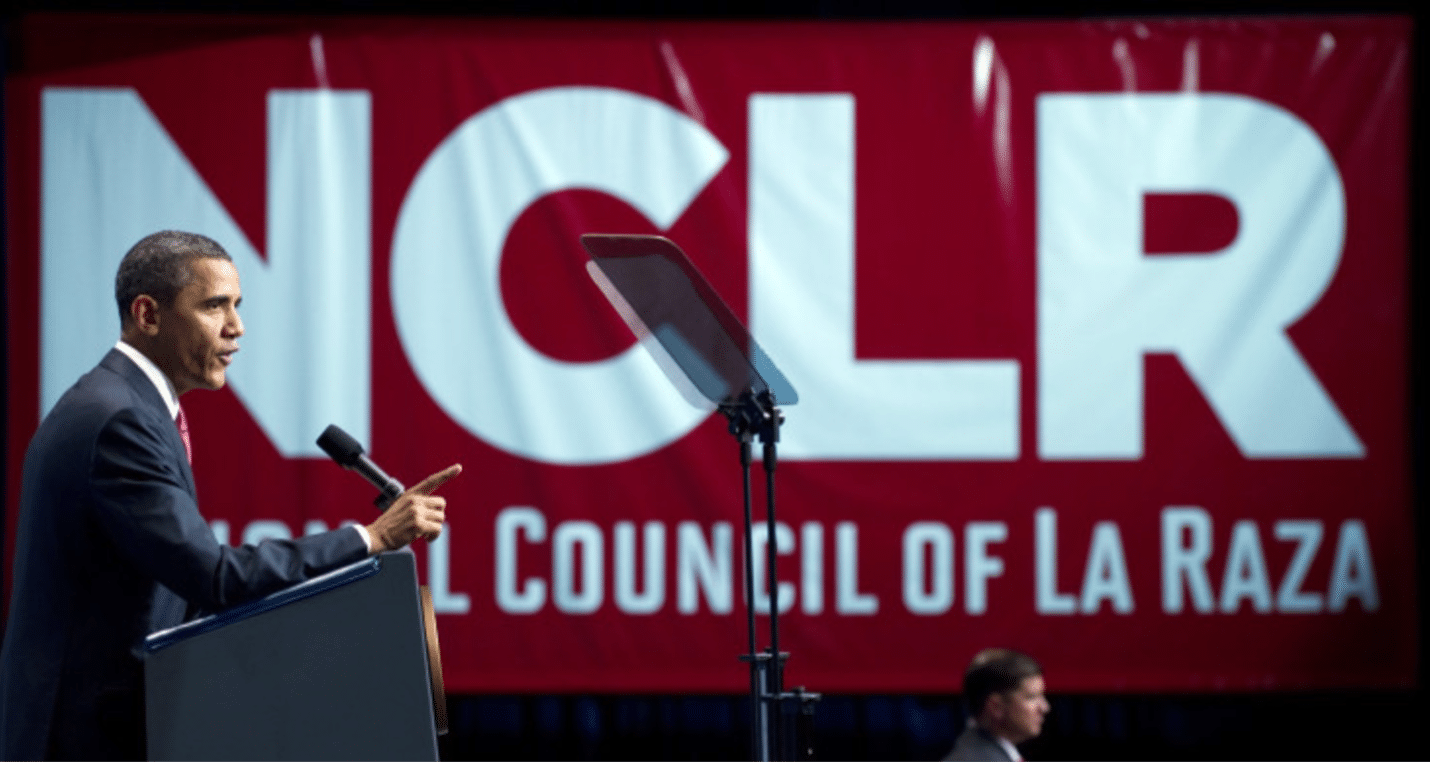
By 2024, Mexican government officials were explicitly citing the need to engage UnidosUS to mobilize “citizen participation and collective action” inside the United States.
The relationship with Becerra is both personal and political. His daughter Clarissa interned at UnidosUS in 2012. The organization sponsored and paid for a $600 trip for Becerra to attend their Philadelphia conference in 2005.
When Becerra was nominated to lead HHS in 2020, UnidosUS supported his nomination and shepherded him throughout his Senate confirmation process. He has repeatedly spoken at their events.
In Arizona, a UnidosUS director participated in a January 2025 meeting hosted at the Phoenix Mexican Consulate. The event featured a who’s who of top Mexican officials and was centered on how Mexico could help counter the immigration policies of the incoming Trump administration.
UnidosUS’s work on civic engagement, political advocacy, and get-out-the-vote efforts frequently intersects with Mexico’s U.S. agenda, as seen in partnerships with groups like Mi Familia Vota and Unidos’s own Civics for All program.
CHIRLA: “My Family”
CHIRLA, a group who Becerra describes as part of his “family,” is another nonprofit whose influence looms large over the gubernatorial hopeful.
CHIRLA has been a close ally of Becerra’s since 2015. Last April, the group issued their official endorsement, vowing to “work hard to get him elected” because of his support for immigrants.

CHIRLA’s ties to Mexico span more than two decades. In 1995 Mexico gave CHIRLA computers to track hate crimes. Since then, the two have worked closely on various events, including workshops for illegal migrants hosted at consular offices. CHIRLA’s CEO even received the Mexican Government’s prestigious Ohtli Award in 2015.
What exactly does CHIRLA do when they are not working with Mexico’s consulates?
In addition to providing services for migrants, CHIRLA mobilizes anti-ICE rallies and deploys legal observers at ICE operations. The group also conducts voter outreach initiatives.
During the 2024 election, CHIRLA placed a Mobile Voting Center in a Los Angeles migrant hub, notably, right near the Mexican Consulate.
All the while, they have collected millions in taxpayer money.
CHIRLA’s government grant revenue was nearly $34 million in 2022. The group was awarded nearly $1 million in grants for citizenship and naturalization services during the Biden presidency.
Last summer, Rep. Jim Jordan (R-OH) launched a House Judiciary investigation of CHIRLA on suspicion that the group was using taxpayer funding to support protests in Los Angeles. Before the probe officially opened, the Trump administration clawed back more than $100,000 in federal funding for the group.
CARECEN: The Earmark and the Consul General
Becerra has also kept a close working relationship with CARECEN-LA, another nonprofit with deep ties to the Mexican government. He has held press conferences at CARECEN offices, spoken at their events, and sponsored a $100,000 congressional earmark directly benefiting the organization in 2009.

CARECEN’s Mexican government ties are so embedded that they appear in the group’s own job listings. An administrative assistant posting on their website explicitly lists “scheduling clients for appointments with the Mexican Consulate” as a core responsibility.
The organization has spent years partnering with Mexico on citizenship workshops and immigration classes with Consuls General. In August 2014, Becerra spoke at CARECEN about asylum policy. Days later, Mexico’s Consul General appeared at the same organization for a workshop.
Taken together, the reporting reveals the extent of Becerra’s ties to Mexico’s U.S. infrastructure and California’s most powerful migrant NGO networks. What those ties could mean for California under a Becerra governorship remains an open question.
