
A grim pattern is beginning to crystallize. A young person, radicalized at school or online against the bedrock values of his family and nation, unleashes fury on the innocent. Sometimes, there is a manifesto—pages of violent drawings and hate-filled screeds, parroting the rhetoric of extremist networks. These fragile but fervent idealogues leave trails of blood in Nashville, Denver, Minneapolis, and Dayton.
Charlie Kirk’s final audience question addressed this issue—specifically, transgender-linked mass shootings. As he spoke his final word — “violence”—a shot rang out. He was gunned down before a crowd of thousands. The FBI later confirmed that the killer was an acolyte of the identity cult—an ardent believer in “TQ+” doctrine.
What has gone so terribly wrong? Why are basic human instincts like procreation and family now seen as oppression by these young radicals? How has the creative power of human sexuality—the driving inspiration for so much art, music, and civilization itself—been twisted into motivation for murderous rampage?
Charlie Kirk, founder of Turning Point USA, saw clearly what many parents are only beginning to grasp—the radicalization of young adults on college campuses is no accident. Kirk chose universities as his stage for public debates to challenge young people whose brittle worldview stunts their flourishing, and to encourage them to think for themselves.
The native-born Red Guard known as “Trantifa” does not suffer debate. Critics of their ideologies are silenced through intimidation or violence. Its members are often products of years of ideological priming that began in K-12 schools. With 83% of schools pushing social and emotional programming–and all 50 states backing it with policy–most students have long been exposed.
The priming runs deeper than gender-bending library books or drag queen story hours. Those obvious targets draw swift outcry from parents but may also obscure the bigger picture: Thirty years of education policy and funding have built a system of values conditioning that ties academic success to ideological conformity.
Progressive dogma permeates education, but it is couched in “soft skills,” safety, or mental health jargon. A sleight of hand called “SEL” (Social Emotional Learning) codifies students’ feelings as “Truth.” Through SEL emotion surveys (e.g., “I feel unsafe,” or “I feel excluded”), subjective perceptions become data. The data then factor into “school climate” scores, alchemizing students’ feelings into purported evidence to judge the safety of their school or the morality of its students.
For example, perceived safety is tracked to alert staff when students report feeling unsafe, regardless any external threat. Many private schools conduct an Assessment of Inclusivity and Multiculturalism to monitor how “included” and “affirmed” their students feel. Such data is spun into a metric the SEL consultants call “climate of inclusivity,” as though sentiment were proof.
SEL recasts speech as violence. The Collaborative for Academic, Social, and Emotional Learning (CASEL) framework, considered the gold standard by politicians and policymakers, teaches to children to prioritize feelings and understand the impact of their actions on others. While this sounds harmless and even beneficial, students internalize that if their words upset someone, they have caused “harm.”
CASEL’s school climate guidance goes even further, casting “microaggressions” and exclusionary language as harm. The oft-mocked “safe space” is an SEL practice. So is “restorative justice,” a discipline system which views verbal aggression or hurtful language as being the same as physical threat. Words are treated as violence, thus requiring intervention.
Many school SEL routines include daily emotional check-ins. Color-coded mood charts, emotion meters, and “zones of regulation” posters are now ubiquitous in classrooms. Yale University’s Center for Emotional Intelligence offers the RULER program, which trains classroom teachers to honor and validate all emotions. In practice, this means that teachers must affirm students’ emotions as true and correct for them. This in turn conditions children to treat their feelings as reliable indicators of reality.
In 2019, SEL programs were retooled explicitly for social justice, emphasizing “student voice” and “identity,” including gender identity. The popular Second Step curriculum instructs teachers to hold “sensitive conversations” about students’ identities and backgrounds, and to intervene if peer comments inflict “emotional harm.” The result? Blurred lines between disagreement and personal attack. By enforcing “identity affirmation,” SEL turns a difference of opinion about “identity” into a perceived threat.
Americans have been surprised by a wave of schoolteachers taking to social media to publicly opined on Charlie Kirk’s murder. Amanda Dodson, a Middle School “Emotional Support Teacher,” endorsed a post “extending absolutely no empathy.” AnneMarie Donahue, an English teacher big on “emotional boundaries,” demonstrated her own by “not offering sympathy.” US History teacher Wayne Boliek—who flaunts his SEL-informed globalist worldview with hashtag “#teachSDGs”–cheered the news: “America became greater today.”
That’s the thing about SEL programs. They don’t just target students. They target everyone involved in educating the next generation. So-called “Adult SEL” is infused into teacher training, counselor certifications, superintendents’ summits, education conferences, and more. Even school accreditations now hinge on SEL-aligned concepts such as “student voice.” The architects of this system knew they couldn’t shape children’s values without first converting the teachers. The push by CASEL for “systemic” social-emotional learning did exactly that.
The FBI have revealed that the killer’s weaponry was engraved with ideological messages, such as “Hey fascist! Catch! ↑→↓↓↓” The etched casings are the starkest symbol of SEL’s dangerous “words are weapons” dogma. As a campus speaker, Kirk invited students to engage in civil debate. But many university students, conditioned by SEL programs in their elementary and secondary schools, see disagreement as danger. Since 83% of K-12 schools use SEL programming and nearly every state supports it, most university students have been exposed. Years of social and emotional conditioning—in schools, online networks, and even many workplaces—has produced a deadly intolerance of different opinions.
SEL permeates every corner of school life, surveilling, tracking, and nudging students and their teachers—click by click—toward the approved worldview. Children are conditioned to believe that their feelings are paramount and that words can wound like bullets. It is emotional programming cloaked as academics, and it has weaponized a generation.
President Trump warned in his eulogy for Charlie Kirk, “If speech is violence, then some are bound to conclude that violence is justified to stop speech. We will not let that be justified.”
To stop the violence, we must dismantle the system that cultivates and encourages it—starting with SEL programs embedded in our schools. That means restoring the proper aim of education: give children the tools of science and reason, in order that they may pursue truth, not just follow feelings.
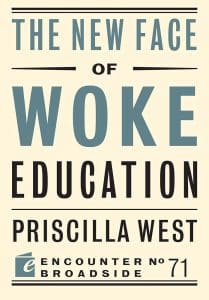
Priscilla West is an education researcher at the Government Accountability Institute. Her book, The New Face of Woke Education, will be published by Encounter Books on October 28.
